



Researchers at UBC, Simon Fraser University and the University of Victoria are working with Sḵwx̱wú7mesh Úxwumixw (Squamish Nation) and BC Parks to better understand and steward some of B.C.’s most iconic and beloved landscapes: the alpine ecosystems of the southwest Coast Mountains.
These ecosystems are facing increasing pressure from climate change, invasive species and human land use.
 Dr. Nina Hewitt paddles across the turquoise waters of Garibaldi Lake to visit a research site. Photo: Stepan Wood
 Dr. Nina Hewitt paddles across the turquoise waters of Garibaldi Lake to visit a research site. Photo: Stepan Wood
The Alpine Horizons Research Initiative is combining scientific methods and Indigenous knowledges to understand how these ecosystems are changing and to develop tools to protect their cultural, spiritual, ecological and recreational value for future generations. Dr. Nina Hewitt (Geography) and Dr. Courtney Collins (Botany) are the initiative’s UBC leads.
Alpine Horizons grew out of an earlier collaborative research project to study the impacts of warming and increased trail use on alpine plant communities around Nch’ḵay̓ (Mount Garibaldi) in Garibaldi Provincial Park, which was launched in 2022 by, then, postdoc Collins and others in UBC Geography and Botany, with faculty leadership from Hewitt and funding from the BC Parks Living Lab program.
UBC researchers are leading several Alpine Horizons projects that address how alpine plants and wildlife in this region are responding to the impacts of climate change and recreation.
How do alpine plants and soils respond to increasing recreational use?
One project, led by Hewitt and Dr. Jennifer Williams (Geography), studies the impacts of hiking on plant communities and soils.
“Getting into nature has well-known health benefits for people, and it fosters environmental awareness and care for wild spaces. At the same time, we need to understand how alpine ecosystems respond to recreational use to help steward biodiversity in these fragile environments,” says Hewitt.
UBC researchers sample plant species along trails with Black Tusk in the background: Photo: Katelyn Croy
 UBC researchers sample plant species along trails with Black Tusk in the background: Photo: Katelyn Croy
BC’s south Coast Mountain parks are iconic spaces for recreation. They provide key benefits including physical fitness, mental well-being and enhanced pro-environmental attitudes. However, visitor numbers are rising steeply and not everyone stays on established trails. Understanding how off-trail trampling affects plant communities and soils will help inform and sustain respectful recreational use.
This project, which continues research initiated in 2022, investigates how sensitive alpine plant species are to trampling, including culturally significant taxa like Vaccinium (huckleberries and blueberries). We also want to know the extent to which trampling facilitates colonization by invasive species and how trampling interacts with changing snow depth and duration to affect plants.
“Our work will explore patterns of invasion of plants and how they correspond to climate change and use of alpine areas by people, with the goal of informing effective management of invasive plants,” says Williams.
Dr. Courtney Collins deploys a UAV (drone) over alpine meadows in the South Coast Mountains to capture fine-scale imagery of alpine meadow plant communities. Photo: Nina Hewitt
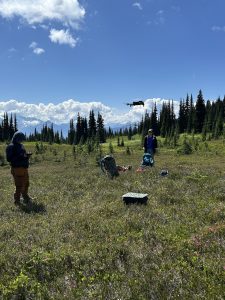 Dr. Courtney Collins deploys a UAV (drone) over alpine meadows in the South Coast Mountains to capture fine-scale imagery of alpine meadow plant communities. Photo: Nina Hewitt
How are mountain huckleberries being affected by climate change?
A second project, led by Collins (now a climate change research ecologist with the B.C. Ministry of Forests and adjunct professor, UBC Botany) and Dr. Amy Angert (Botany), focuses on Mountain Huckleberry (Vaccinium membranaceum) and other Vaccinium species. These species are keystone plants in Sḵwxwú7mesh culture for berry harvesting. They also provide important resources and habitat for wildlife.
Thin-leaf huckleberry growing in the BC subalpine zone. Photo: Nina Hewitt
 Thin-leaf huckleberry growing in the BC subalpine zone. Photo: Nina Hewitt
This project asks whether these species will be able to adapt to a changing climate by moving upward to higher elevations, and how factors like soil, dispersal and microclimate might influence the population dynamics of range shifts. We are also interested in potential changes in the timing of flowering and berries (phenology) and berry production, and how those changes may impact accessibility for harvest and quality of wildlife habitat.
“We want to understand biodiversity impacts, particularly in response to changing climates, including species’ range shifts as climates warm”, says Collins.
How are alpine mammals responding to climate change and outdoor recreation?
A third UBC project looks at wildlife. Large mammals like grizzly bears, wolverines and mountain goats are facing a turning point in BC’s southwest Coast Mountains. These wide-ranging species are sensitive to increasing habitat fragmentation, recreation activity and climate shifts occurring in the region’s alpine habitats, which sit precariously on the frontlines of contractions in the animals’ historical ranges.
A Black bear forages in a meadow in the BC alpine. Photo: Cole Burton
 A Black bear forages in a meadow in the BC alpine. Photo: Cole Burton
Detailed data on the distribution, abundance, habitat use and behaviour of mammals in relation to such threats are lacking but needed to inform proactive stewardship measures. This project, led by Dr. Cole Burton (Forestry), will use camera trap surveys to sample mammals through time across gradients in elevation, land cover and recreation pressure, and build models of current and predicted distributions of these culturally valued wildlife.
How will climate warming affect alpine plants above and below ground?
Open top warming chambers passively warm tundra to reveal climate responses in one of the study sites. Photo: Nina Hewitt
 Open top warming chambers passively warm tundra to reveal climate responses in one of the study sites. Photo: Nina Hewitt
A fourth project involving UBC researchers experimentally models the impact of warming on alpine plants. High elevation ecosystems are warming faster than lower elevations worldwide, but we do not know which plant communities are most sensitive or resilient to warming in the southwest Coast Mountains. To test this experimentally, we established long-term monitoring plots near Nch’ḵay̓ (Mount Garibaldi) in Garibaldi Provincial Park, in three alpine plant community types: dry heather meadows, mesic willow shrublands and wet sedge meadows.
We installed open top plexiglass warming chambers (OTCs) to passively warm the plots by 1-3 ºC and have been collecting data on plant community composition, plant traits, plant and root phenology, and soil microbial dynamics since the project was initiated by Collins and UBC PhD student Cassandra Elphinstone in 2022. Going forward, the project is led by Dr. Chelsea Little (SFU).
Drs. Williams, Hewitt and Collins — with Burton and Angert, not shown — share their research plans at an opening event for the Beaty Biodiversity Research Centre earlier this fall. Photo: Cole Burton

The Alpine Horizons Research Initiative is funded by a Natural Sciences and Engineering Research Council (NSERC) Alliance Grant (PI Dr. Noémie Boulanger-Lapointe, UVic).
Follow us on Instagram

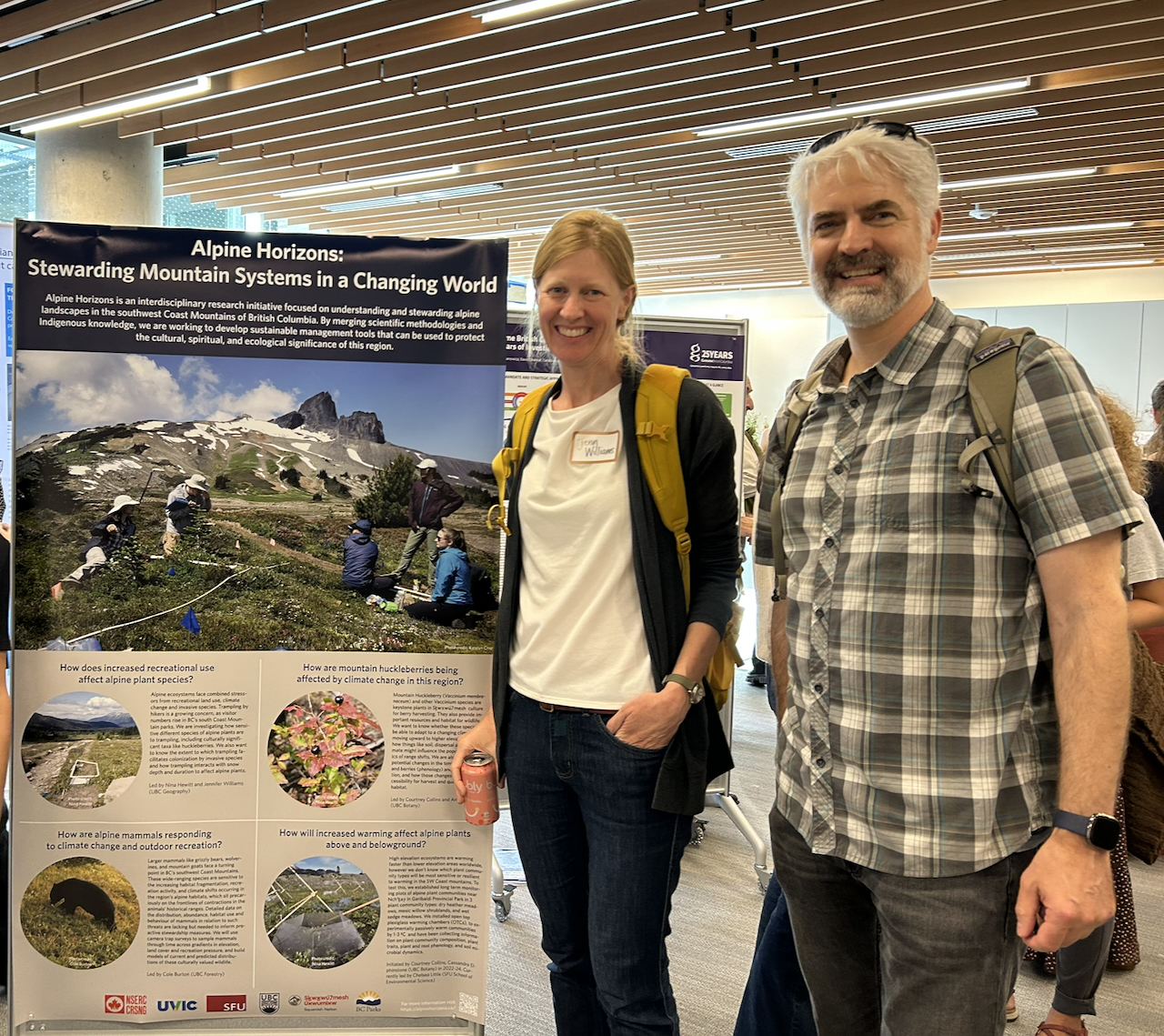
Drs. Jennifer Williams and Cole Burton at an opening event for the Beaty Biodiversity Research Centre. Photo Nina Hewitt 2025
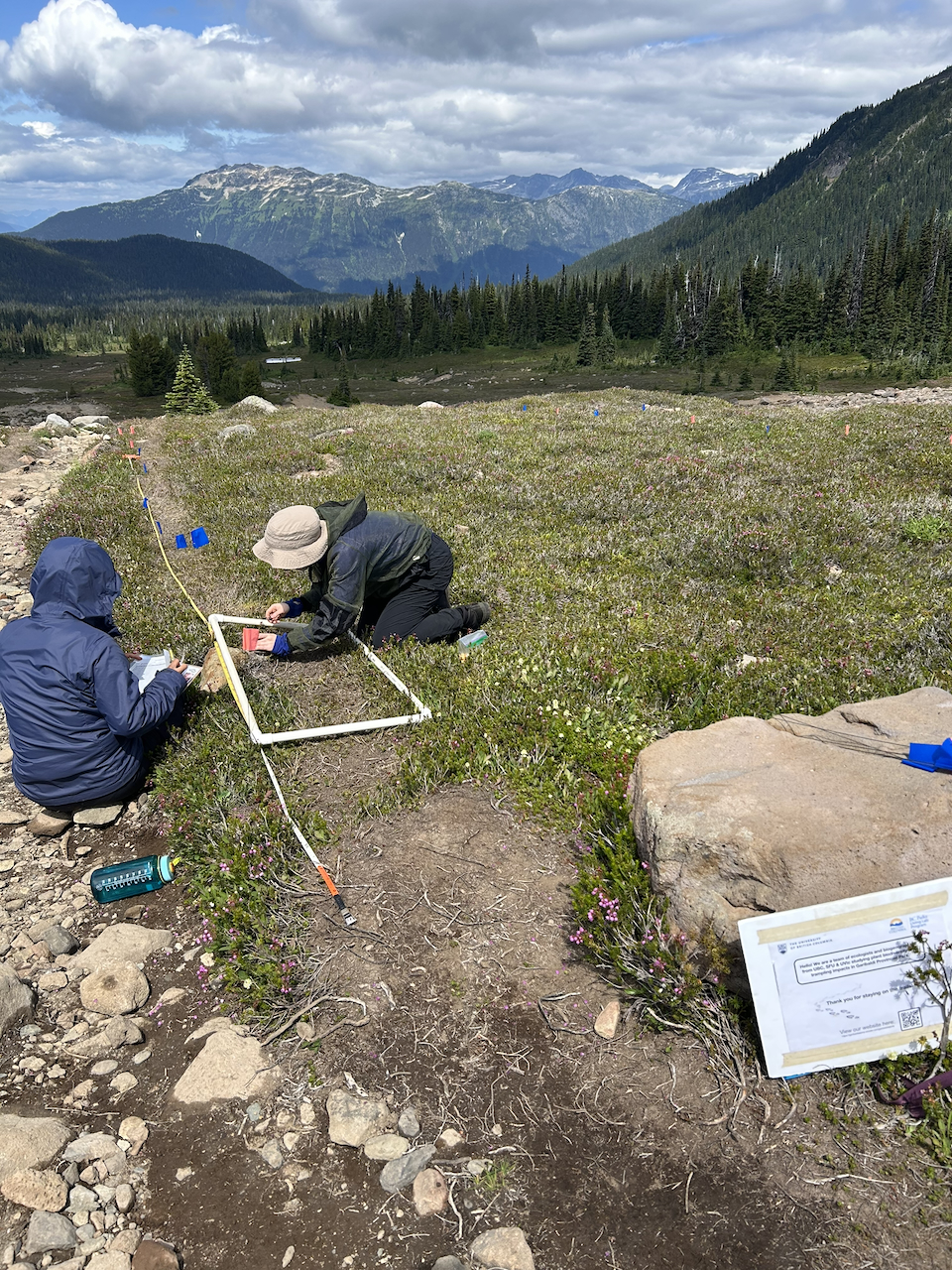
Sampling plant species composition along Helm creek trail. Photo Nina Hewitt 2025
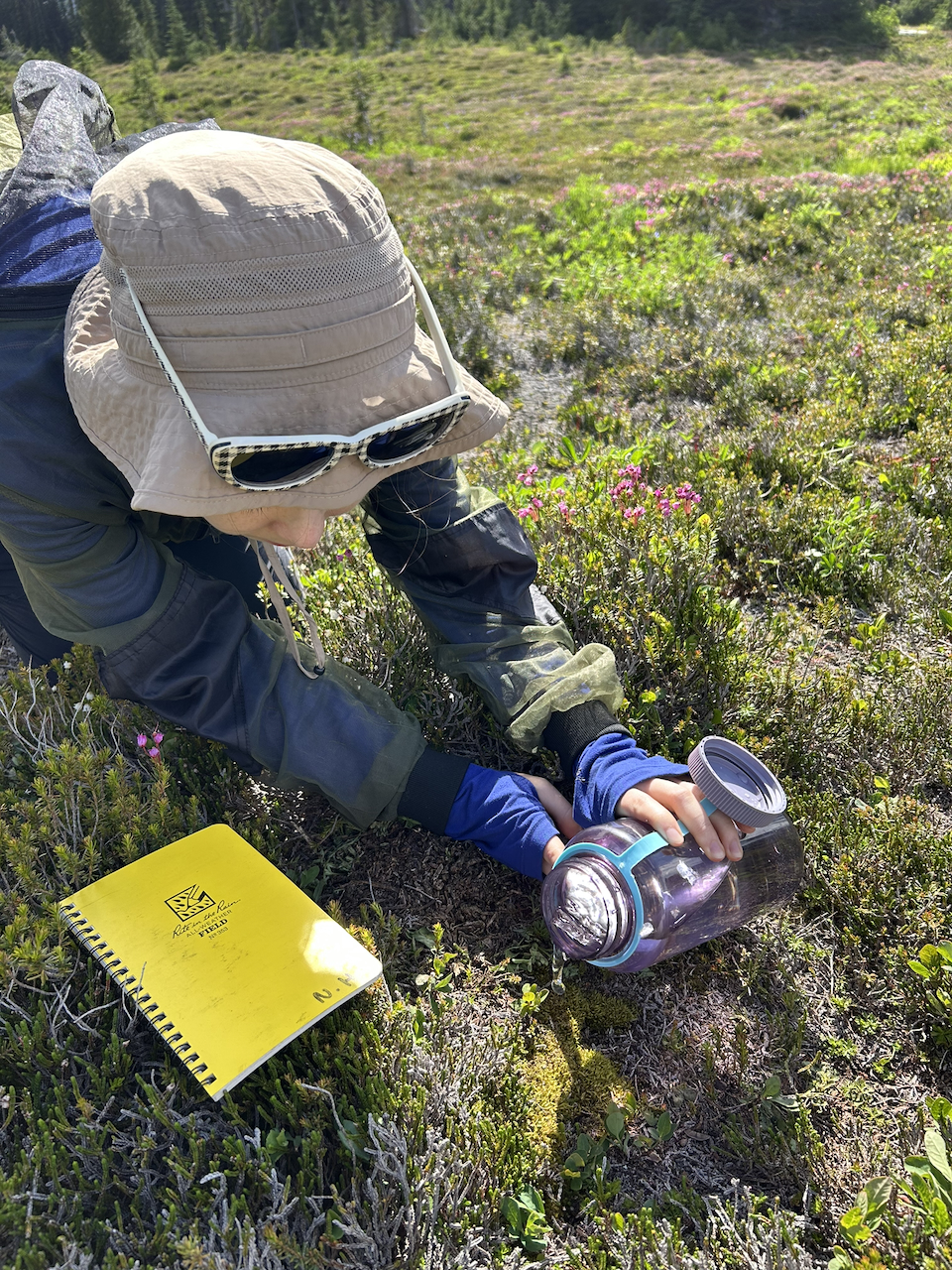
Undergrad RA Teagan MacLachlan helps identify mosses in the field. Photo Nina Hewitt 2025
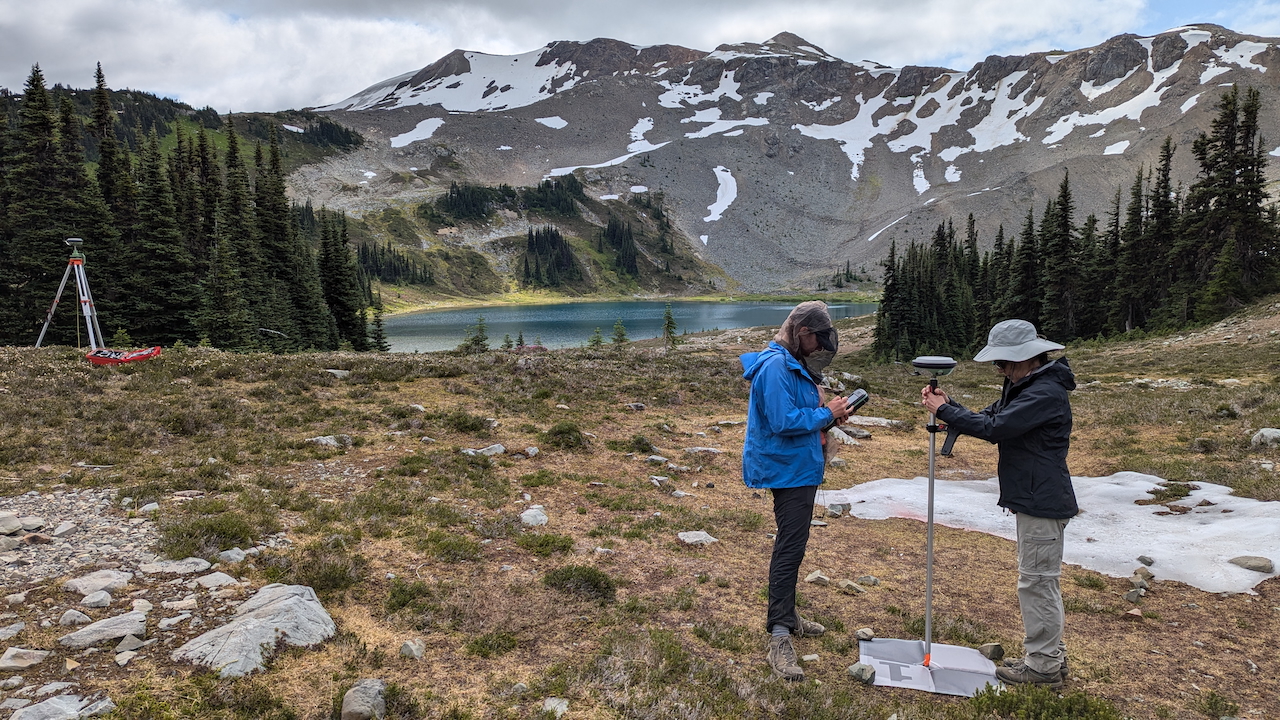
Obtaining ground control points for UAV survey. Photo Stepan Wood 2024

Drone image of Taylor Meadows. Photo Courtney Collins 2025
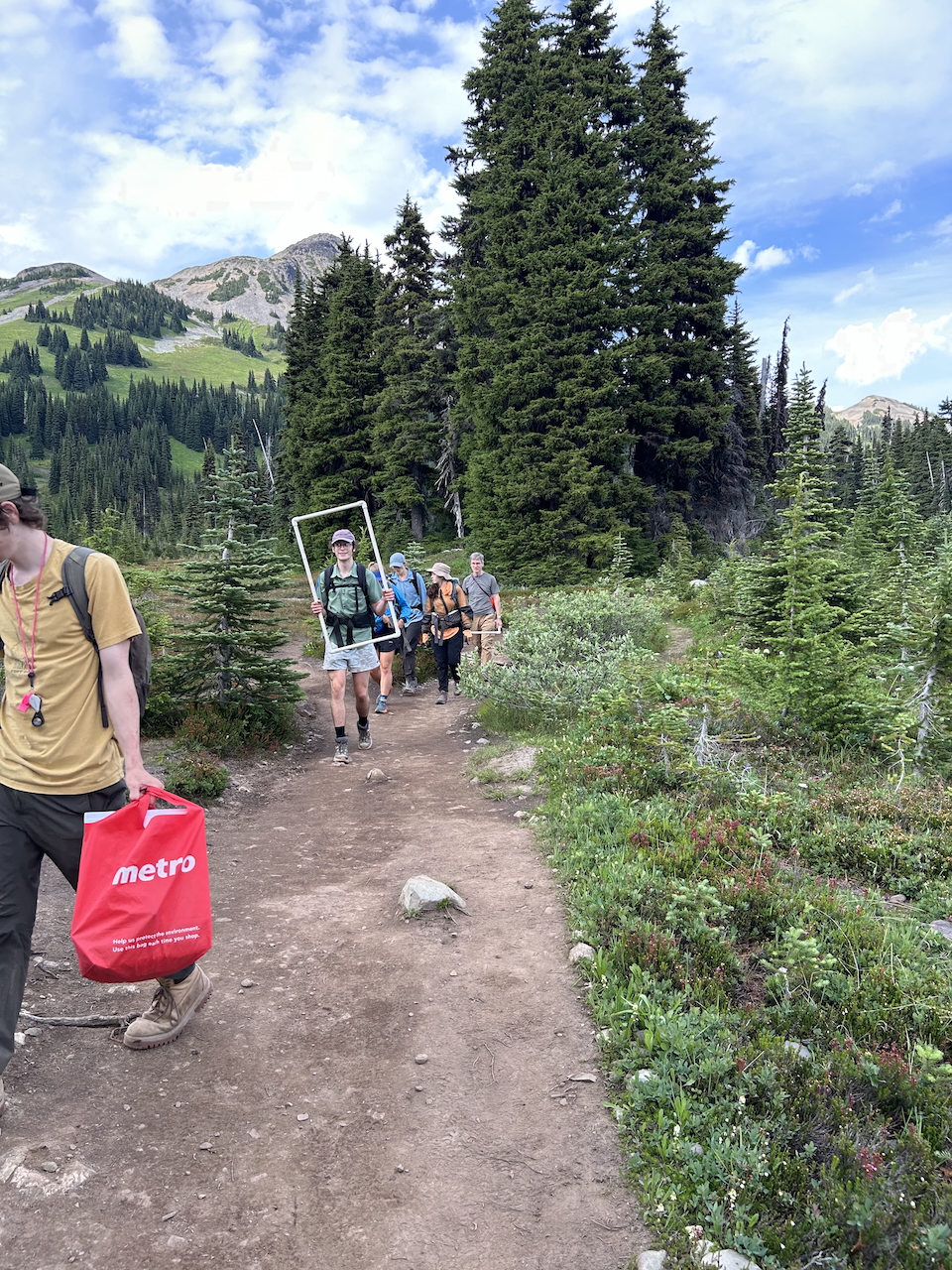
Heading out along the trail to sample biodiversity. Photo Nina Hewitt 2024

MSc student Evan Kohn with Collins and Angert, Garibarldi Lake in the background. Photo Anon

Dr. Amy Angert takes a break from Vaccinium searching in Garibaldi Park. Photo Courtney Collins
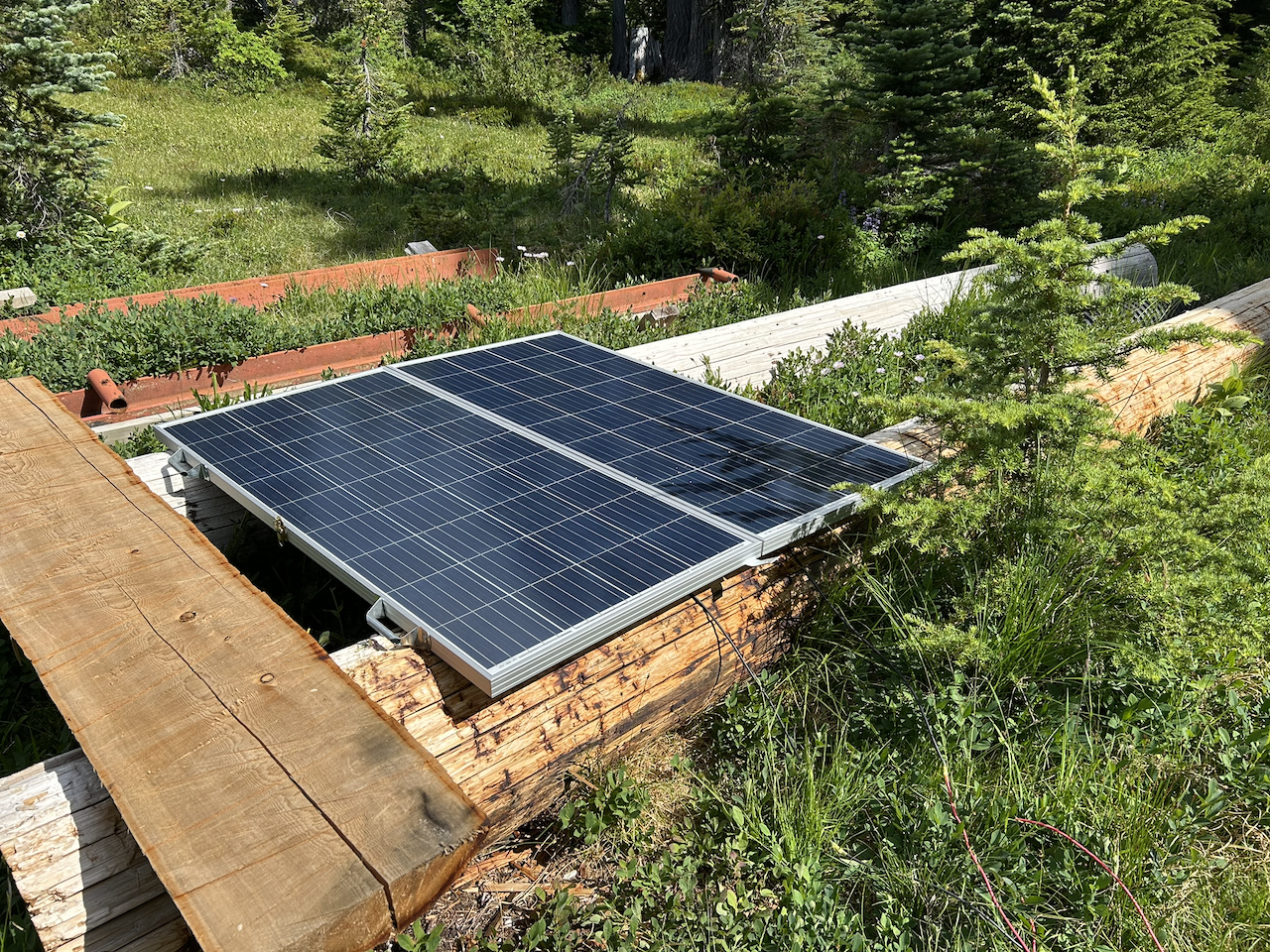
Our solar panel in the alpine for charging UAV equipment. Photo Nina Hewitt 2025
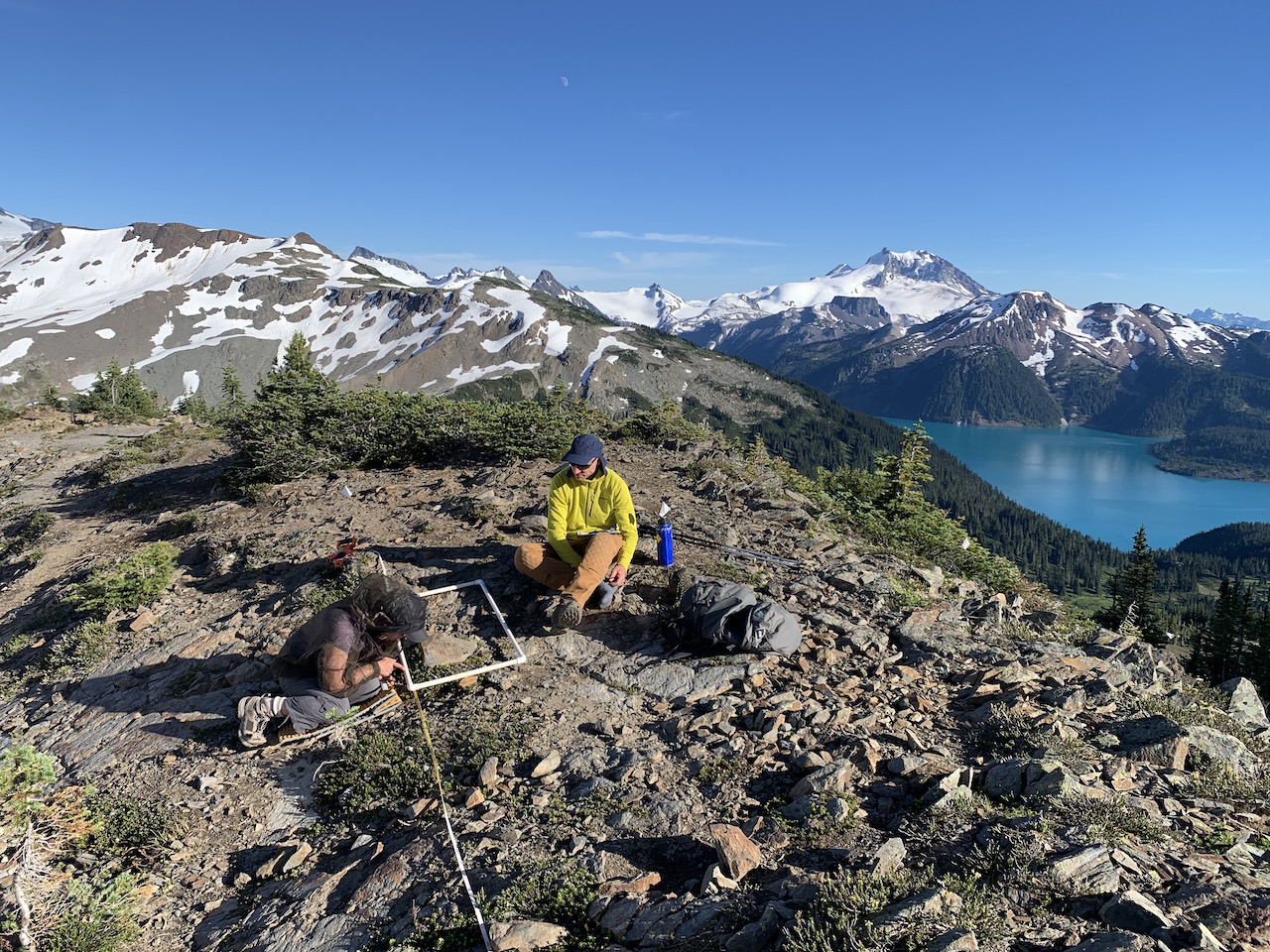
Black Tusk trampling surveys with Lake Garibaldi in the background. Photo Caroline Chong 2022
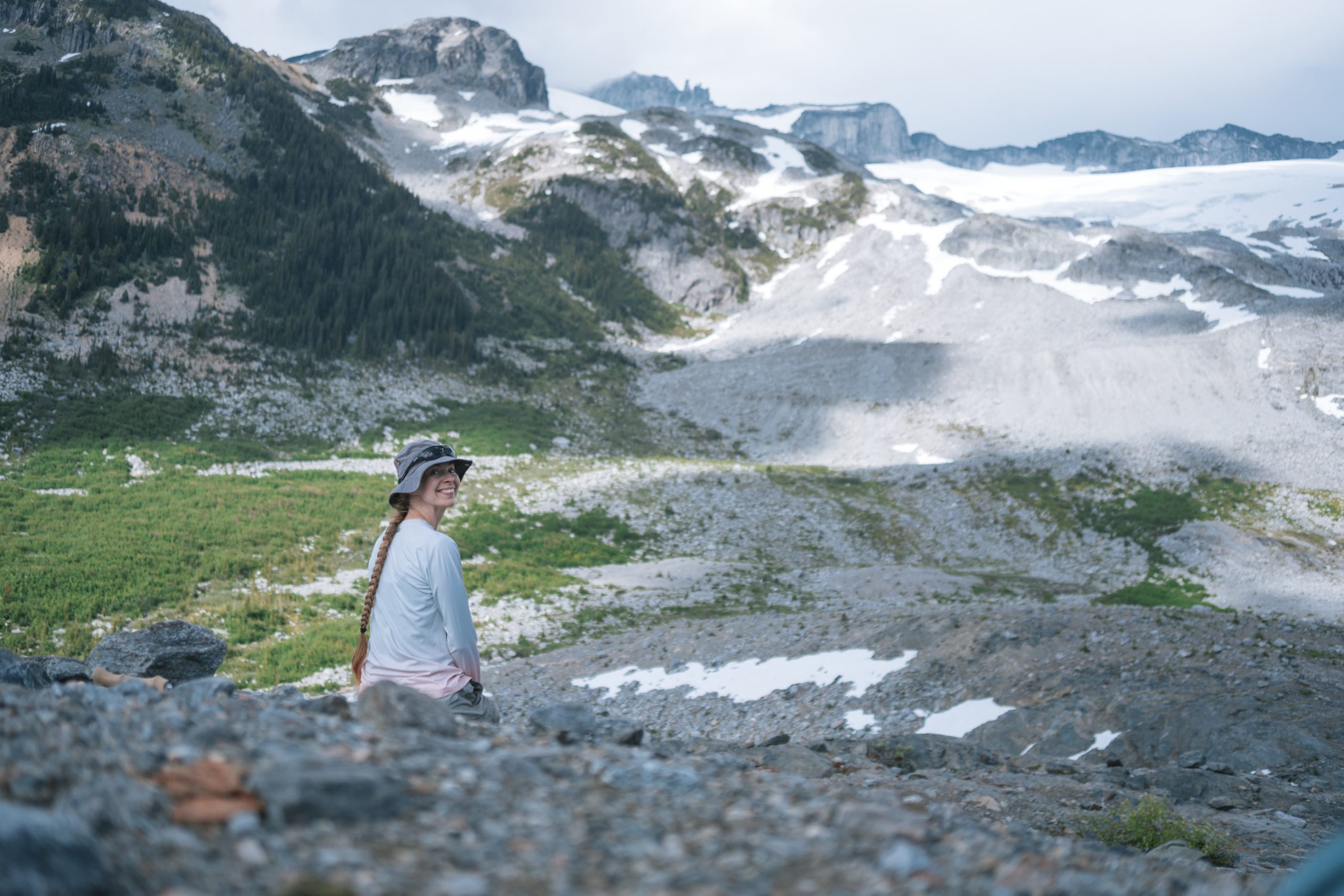
Cassandra Elphinstone takes a break from the warming experiment sampling. Photo Ciara Norton 2023
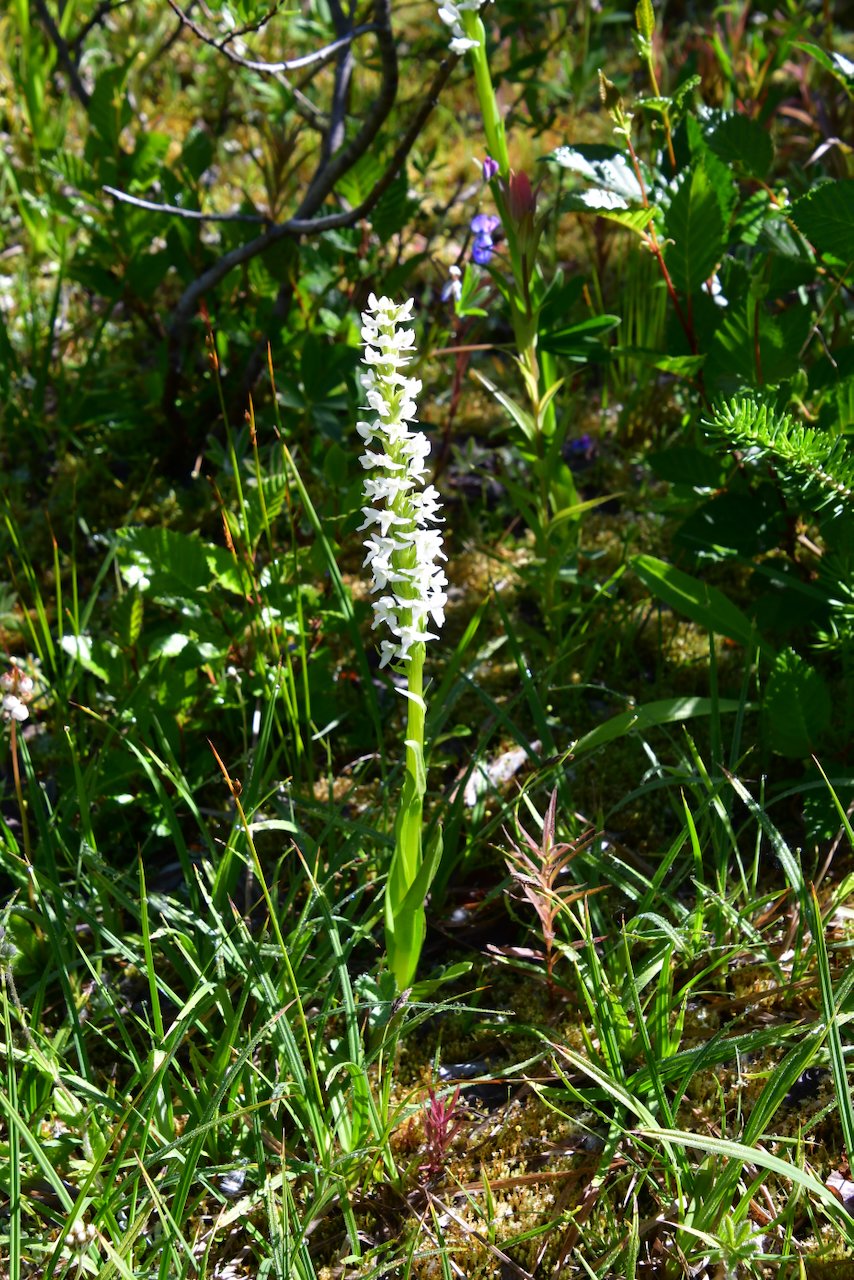
White bog orchid, Garibaldi Provincial Park. Photo Nina Hewitt 2022
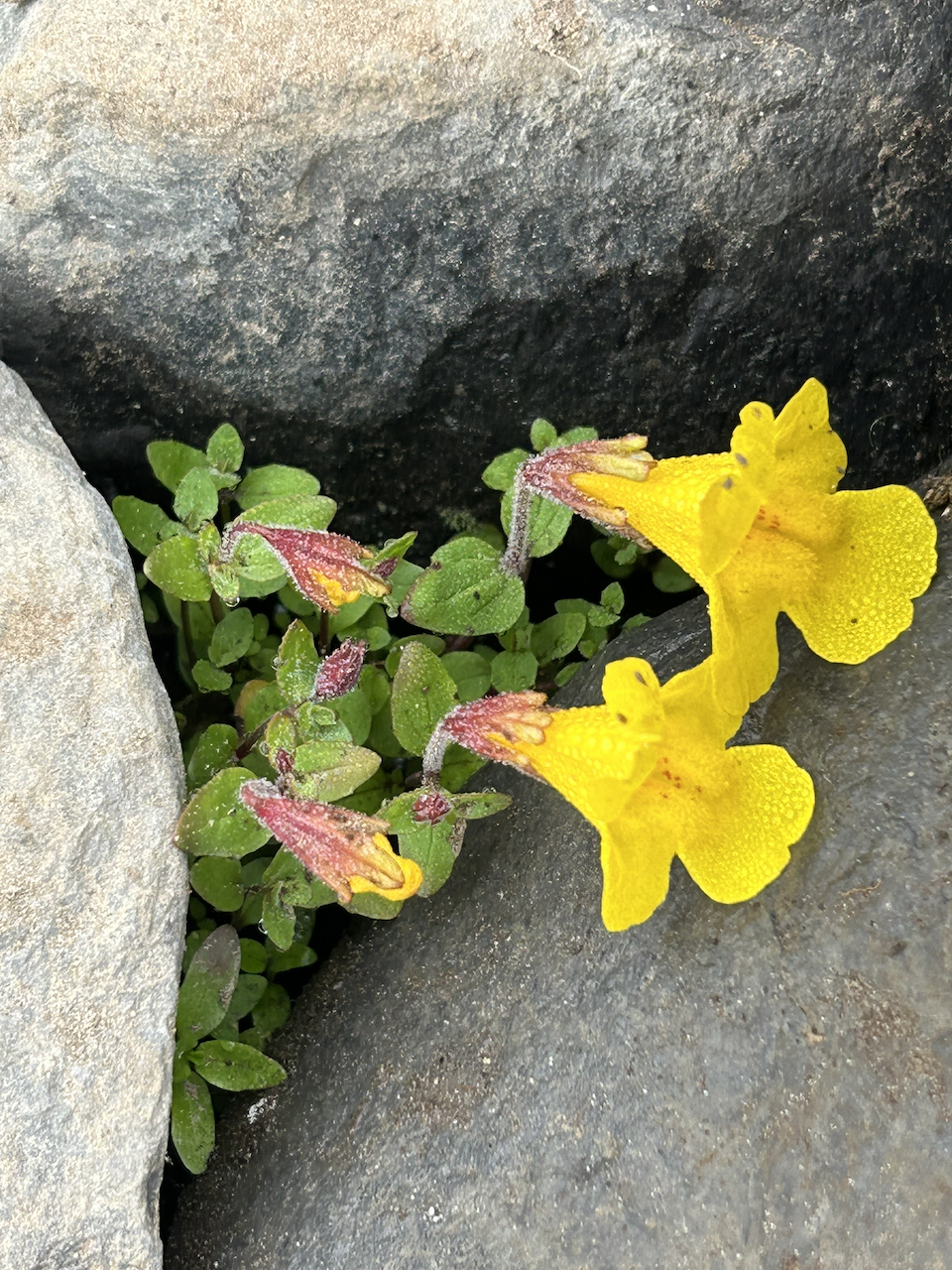
Yellow monkey flower, Black Tusk. Photo Nina Hewitt 2025
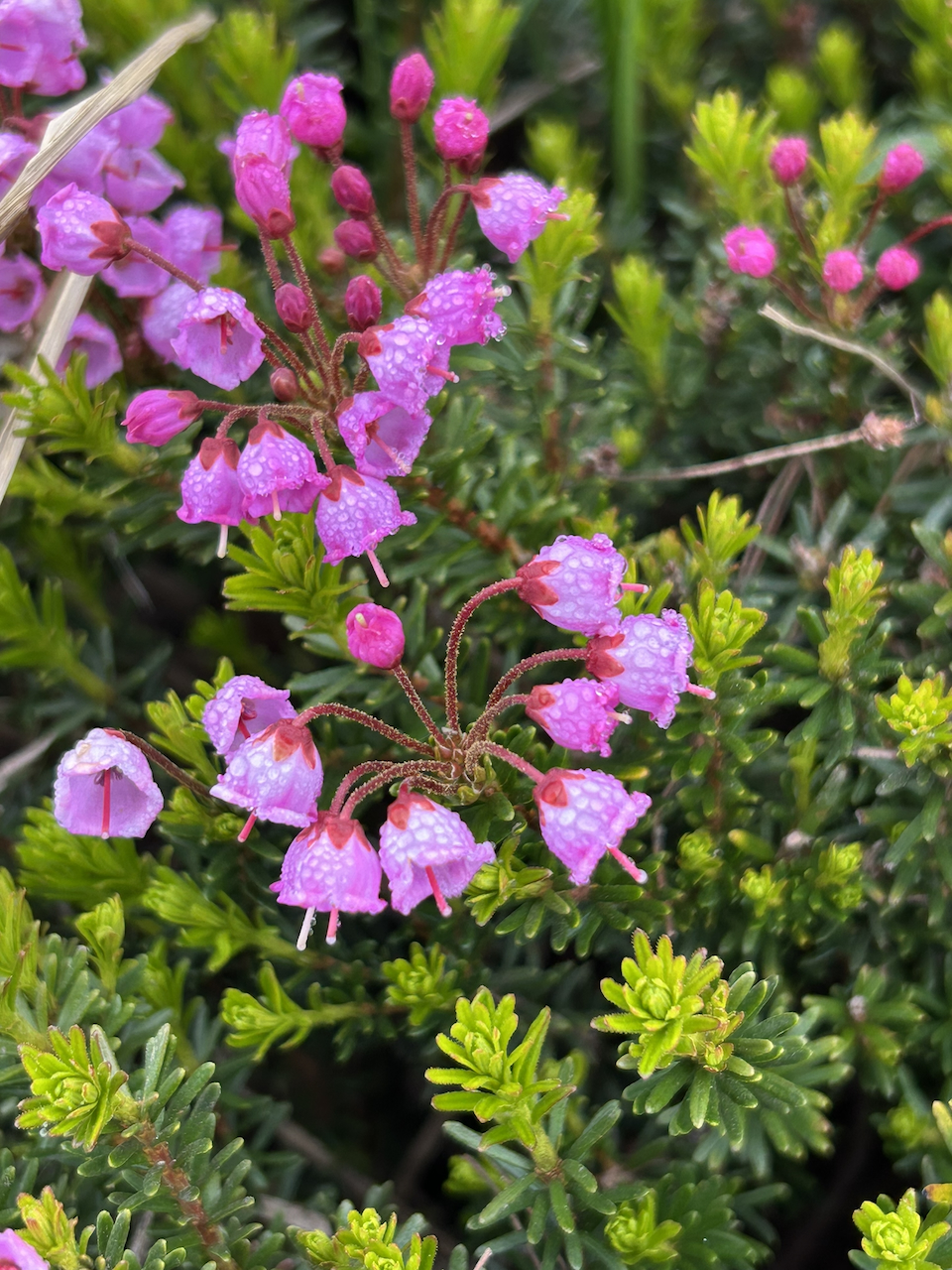
Pink mountain heather. Photo Nina Hewitt 2025
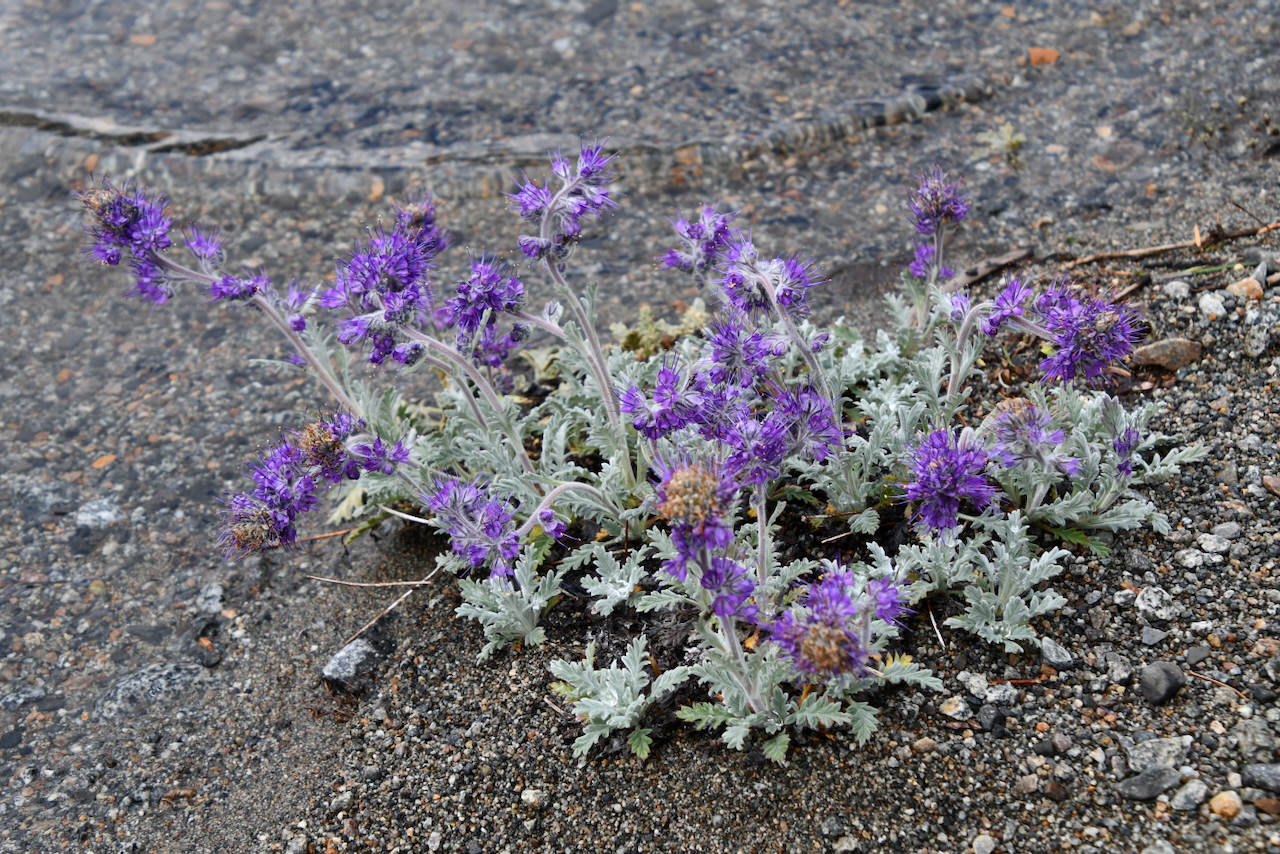
Silky phacelia, Garibaldi Provincial Park. Photo Nina Hewitt 2022
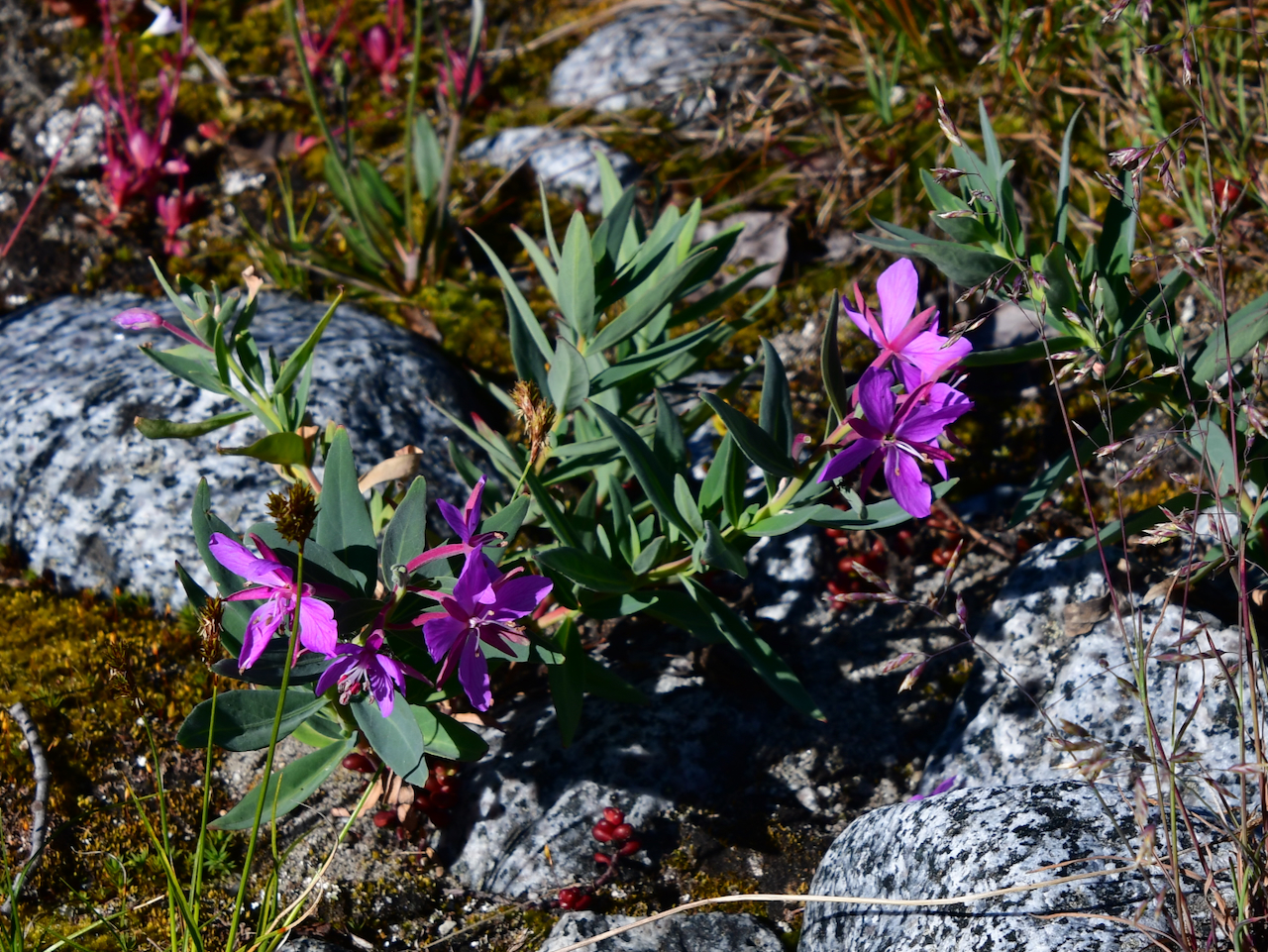
Dwarf fireweed, Garibaldi Provincial Park. Photo Nina Hewitt 2022
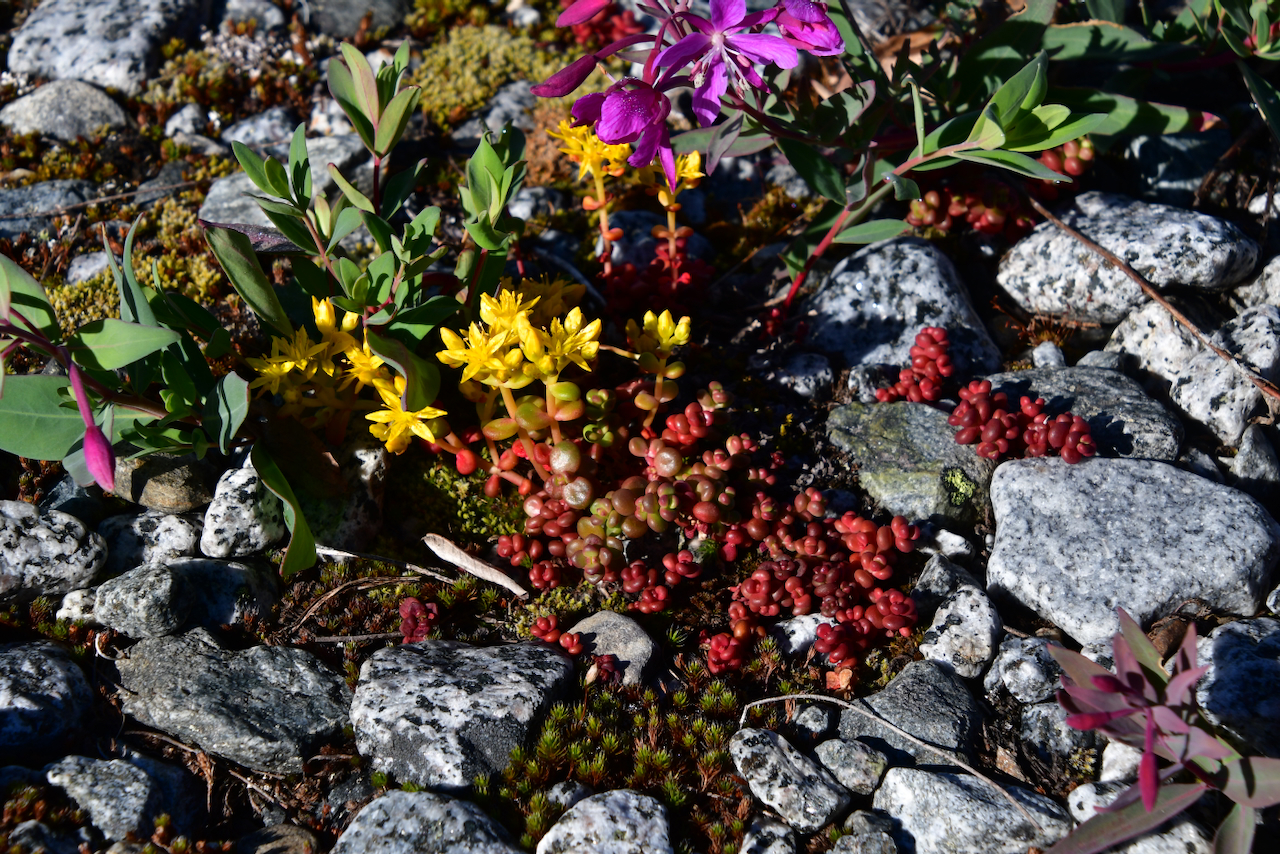
Pacific stonecrop, Garibaldi Provincial Park. Photo Nina Hewitt 2022
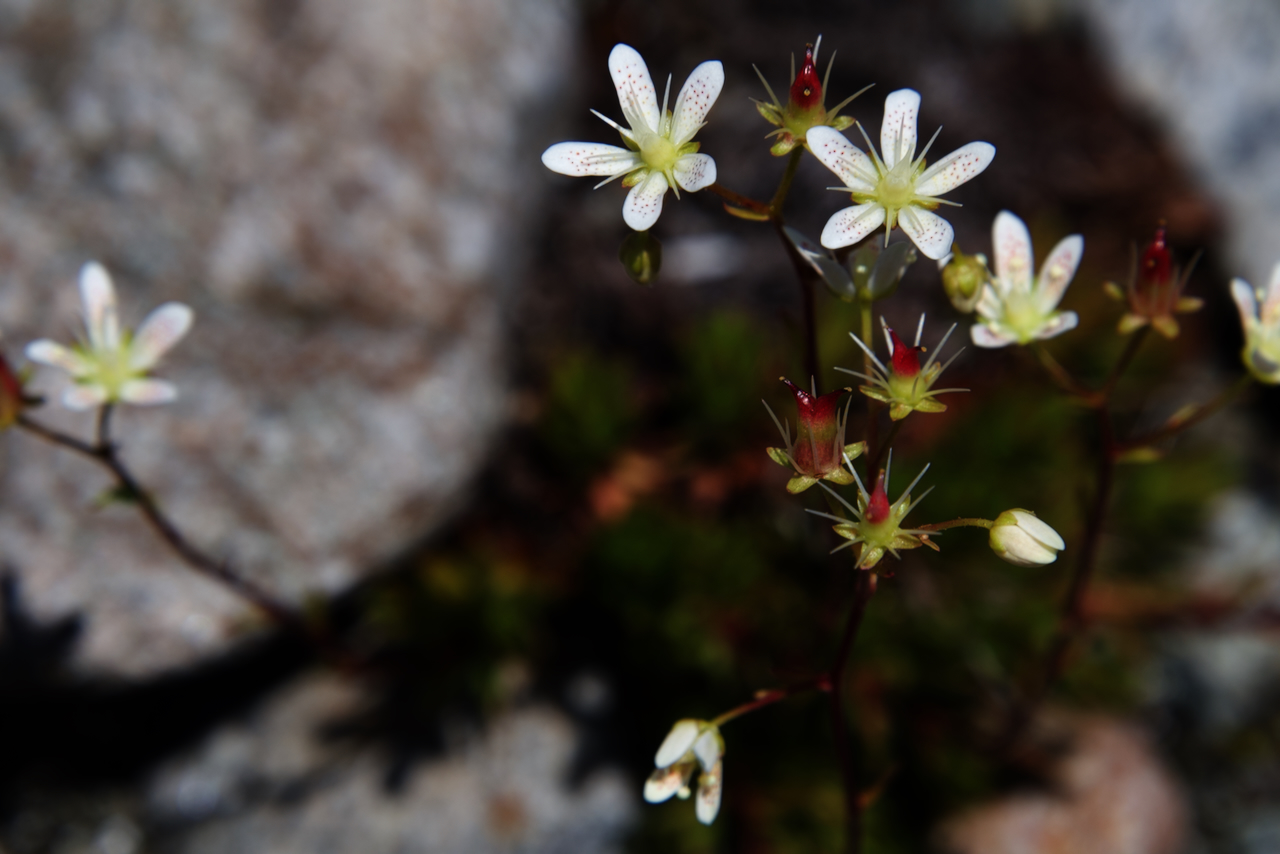
Spotted Saxifrage, Garibaldi Provincial Park. Photo Nina Hewitt 2022

Paintbrush, Castilleja species, Garibaldi Provincial Park. Photo Nina Hewitt 2022
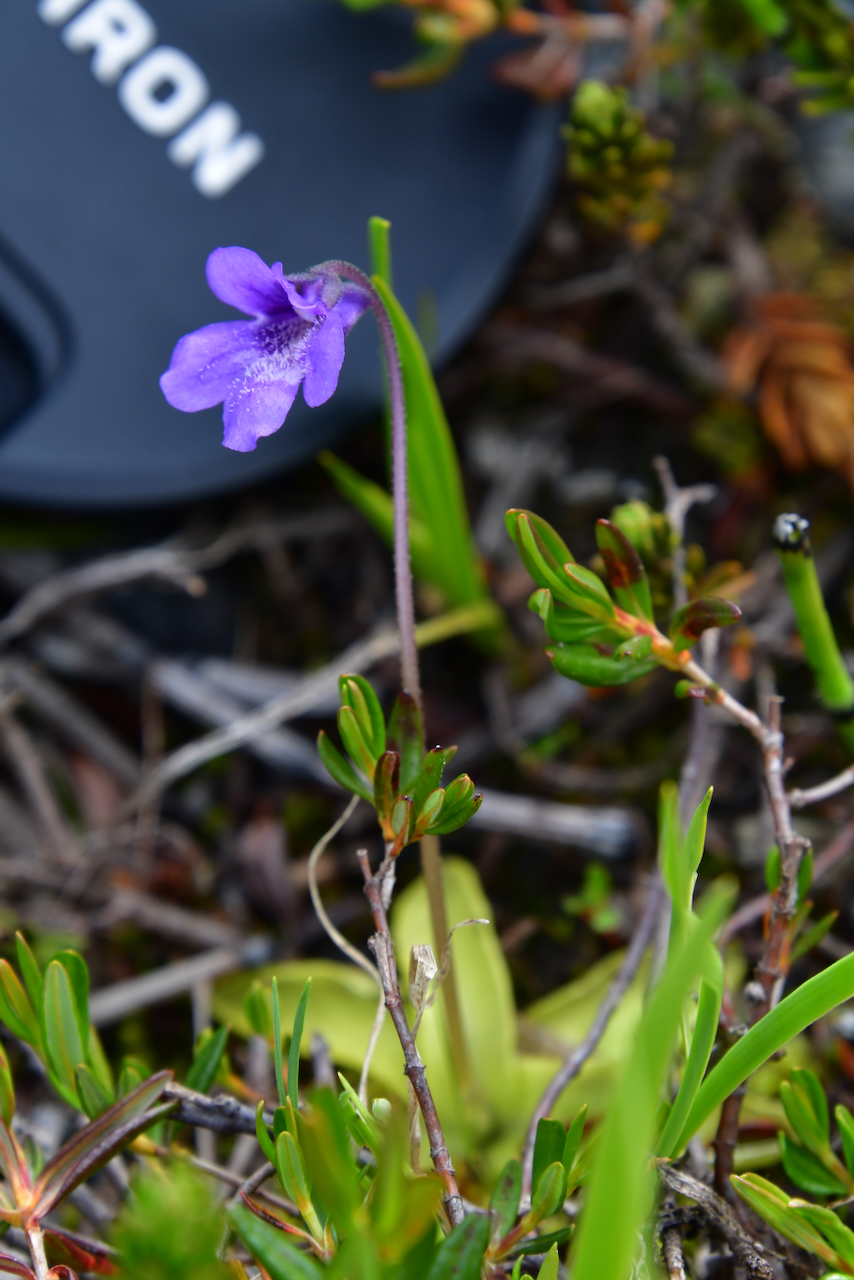
Common butterwort, a carnivorous plant, Garibaldi Provincial Park. Photo Nina Hewitt 2022


